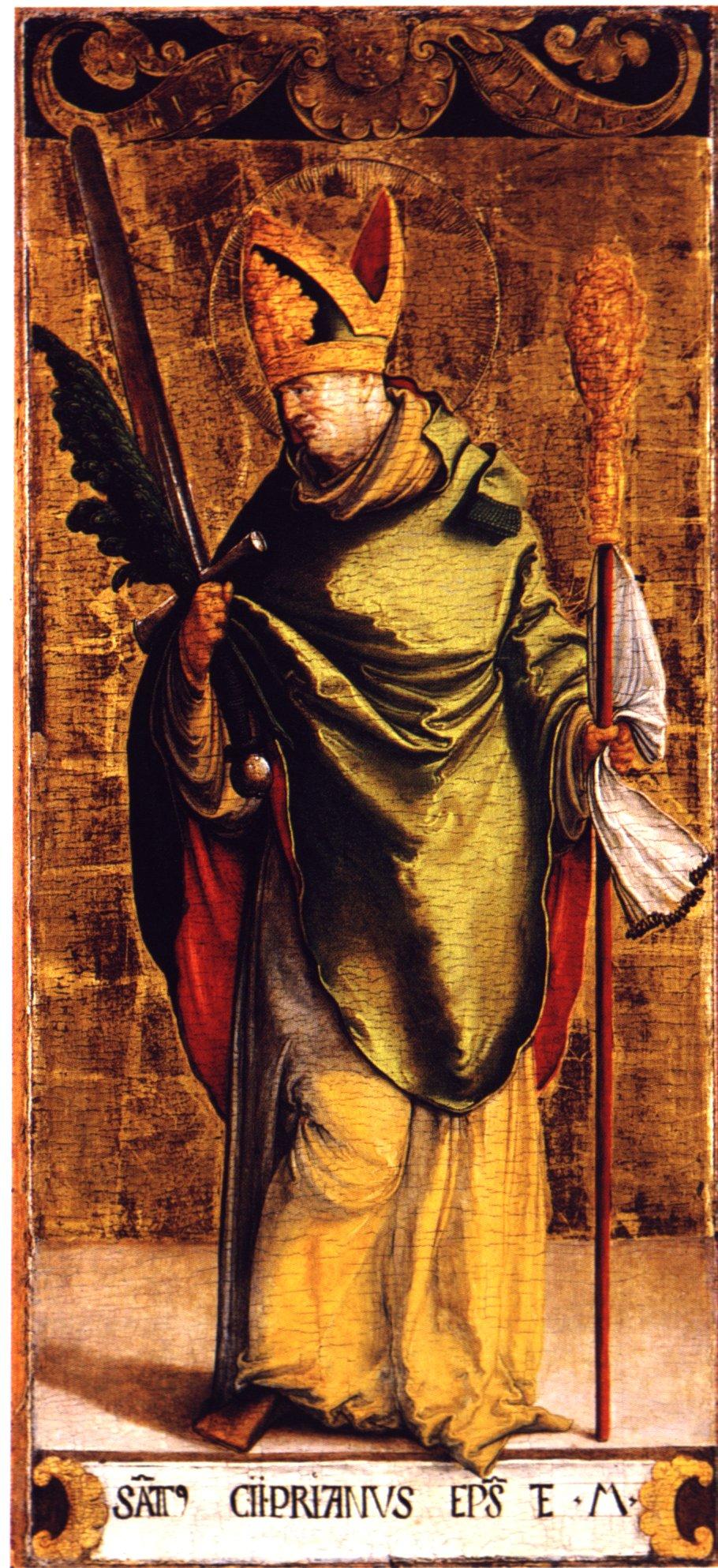
Thascius Caecilius Cyprianus, before his conversion, was a wealthy and successful rhetorician in Roman Carthage — exactly the kind of pagan elite that Christianity in the third century was beginning to attract. He converted around 246 AD under the influence of an elderly priest named Caecilianus, sold a large portion of his estate to give to the poor, and was elected bishop of Carthage in 248 — within only two years of his baptism. The election was not uncontested; some clergy felt the rapid promotion violated the customary pattern. The objections did not prevail.
The decade of Cyprian's episcopate was one of the most stressful in the early Latin Church. The Decian persecution of 250–251 broke over the empire and produced the first imperial demand that every inhabitant prove participation in the public sacrifices. Christians who complied (the 'lapsed') and Christians who refused (the 'confessors') created an immediate ecclesiological crisis: how should the church receive back those who had failed under pressure, and on whose authority?
Cyprian's answer, developed in his treatises De Lapsis and De Unitate Ecclesiae and in a vast surviving correspondence, was that the bishop holds the keys: only the legitimate, ordained bishop in communion with the wider episcopate can readmit the lapsed, and only after due penance. Outside the unity of the bishops, the church does not exist; schismatic sacraments are not sacraments. This is the source of Cyprian's most famous epigram: 'He cannot have God for his father who has not the Church for his mother' (De Unitate 6). The argument was sharp, controversial, and decisive for the shape of Latin ecclesiology in everything that followed — through Augustine, into the medieval West, and into the Reformation debates over what makes a true church.
Cyprian survived the Decian persecution by going into hiding — a decision that drew criticism but which he defended as pastorally necessary, since a bishop in exile could still write letters, while a bishop dead by martyrdom could not yet be replaced. When the persecution slackened, he returned, organized the church's response to a massive plague that swept Carthage in 252, wrote his treatise De Mortalitate on the Christian response to mass death, and continued to administer the diocese with characteristic precision.
The Valerianic persecution of 257–258 returned with renewed force, and this time Cyprian did not hide. He was tried, exiled to Curubis, and recalled. On September 14, 258, he was brought before the proconsul Galerius Maximus in Carthage. The court record — the Acta Proconsularia Cypriani — survives, and is among the most documentary of all ancient martyrdom accounts. Cyprian refused to sacrifice, was sentenced to be beheaded, and was led out to the place of execution that same day. His final word, according to the Acta, when the executioner asked his pardon, was simply 'Deo gratias' — 'thanks be to God.'