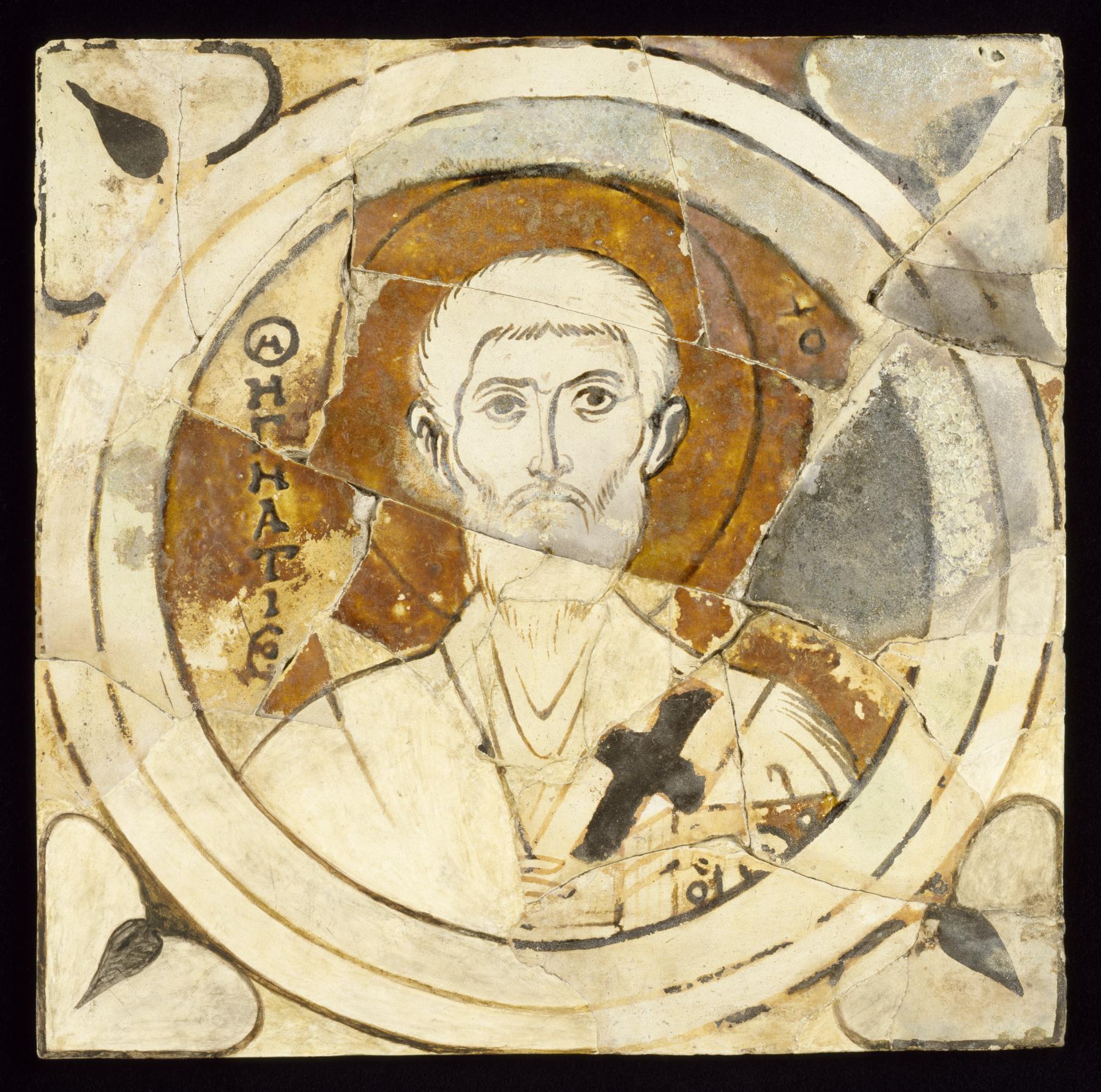
Ignatius was the bishop of the church at Antioch, the city where the disciples were first called Christians (Acts 11:26) and one of the three or four most important sees in the early Christian world. Eusebius lists him as the third bishop of Antioch, after Peter himself and Evodius — a striking apostolic-succession claim placing Ignatius within a generation of the apostles.
Around 107 or 108 AD, under the emperor Trajan, Ignatius was condemned to be sent to Rome and killed in the arena. The Roman authorities frequently shipped notable Christians to the capital for execution as a deliberate spectacle — feeding a famous bishop to wild animals in the Colosseum was both a punishment and a piece of imperial theater. What the empire did not anticipate was that the journey to Rome would itself become the most influential pastoral correspondence of the post-apostolic age.
Ignatius wrote seven letters during the trip — six to churches that had sent delegations to meet him along the route (Ephesus, Magnesia, Tralles, Rome, Philadelphia, Smyrna) and one to his fellow bishop Polycarp. The letters are intimate, urgent, and theologically dense. They contain the first clear articulations of the threefold ministry of bishop, presbyters, and deacons; the first surviving use of the phrase 'catholic church' (in the Letter to the Smyrnaeans 8:2); the first sustained defense of the real bodily Incarnation of Christ against incipient Docetism; and the first developed account of martyrdom as a deliberate participation in the death of Christ.
The Letter to the Romans is the most famous. Ignatius pleads with the Roman Christians not to intervene to spare him. 'I am the wheat of God,' he writes, 'and I am to be ground by the teeth of wild beasts that I may be found pure bread of Christ.' This is not the language of despair or fanaticism. It is the deliberate theological choice of a man who has spent decades teaching the imitation of Christ and now sees the opportunity to enact what he has preached. He died in the arena in Rome — almost certainly under Trajan, perhaps as part of the games celebrating the emperor's military victories.
His letters survive because the churches that received them recognized immediately what they had. Within a generation, they were being collected and copied. Polycarp himself writes about gathering Ignatius's letters in his own Letter to the Philippians 13:2. Two thousand years later, they remain among the most-read documents of patristic Christianity — not because of the drama of their author's death, but because of the depth of their theological vision under the pressure of it.