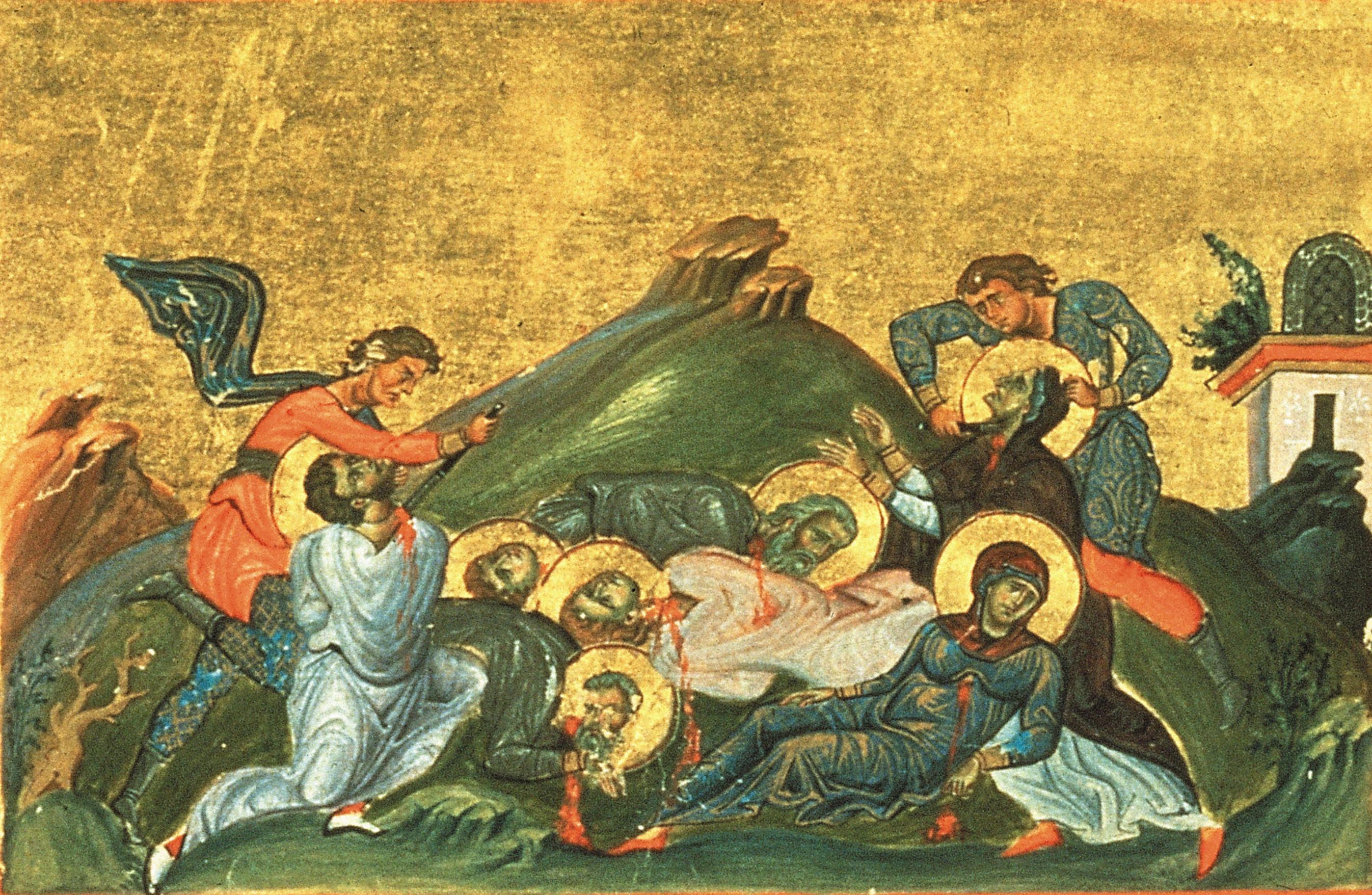
Vibia Perpetua was a 22-year-old Roman matron of Carthage, married, recently delivered of a son, and a recent catechumen at the time of her arrest. Felicitas (Felicity in English) was her slave — pregnant at the time of arrest and described in the Passion as already a Christian. They were arrested with three companions (Revocatus, Saturninus, and Secundulus) and a teacher named Saturus who voluntarily joined them in prison after their detention.
The Passion of Perpetua and Felicity is one of the most remarkable documents of the ancient Church. Its core is a prison diary kept by Perpetua herself — in her own first-person voice, the earliest such voice surviving from a Christian woman and one of the earliest from any woman in antiquity. She records her interrogations, her father's anguished pleas that she renounce the faith, her concern for the infant she was still nursing, and four extraordinary visions that occur to her in prison. An editor — possibly Tertullian, certainly someone steeped in the African Christian milieu — frames her account with an introduction and an eyewitness narrative of the actual day in the arena.
The Roman context: the emperor Septimius Severus had reportedly issued an edict around 202 AD forbidding conversion to Christianity or Judaism. Whether the edict is historical or a literary construct, the Carthage prosecutions were real. The five — six counting Saturus — were sentenced to be killed by beasts in the arena, to coincide with the games celebrating the birthday of Severus's son Geta.
Felicitas was eight months pregnant. Roman law forbade executing a pregnant woman; she begged for her child to be born early so she could die with her companions. She gave birth two days before the games. The infant was given to a Christian sister to raise. On the appointed day, the men were attacked by beasts; Perpetua and Felicitas were stripped, placed in nets, and exposed to a wild cow. The crowd was horrified by the sight of two recent mothers, and the women were brought out and clothed. Eventually, when the beasts had not finished them, the gladiators were sent in. Perpetua, the Passion records, guided the trembling young swordsman's blade to her own throat.
Augustine preached at least three sermons on Perpetua and Felicitas (Sermons 280–282), and the cult of the two women remained powerful in North Africa for centuries — their names became fixed in the Roman canon of the Mass, which is still recited today in the Latin Rite. What Augustine saw in them, and what the modern reader can still see in Perpetua's own surviving voice, is not only courage but the specific shape of Christian witness: a woman, mother, daughter, and slave who would not let any of those identities be the final word over the one she had received in baptism.