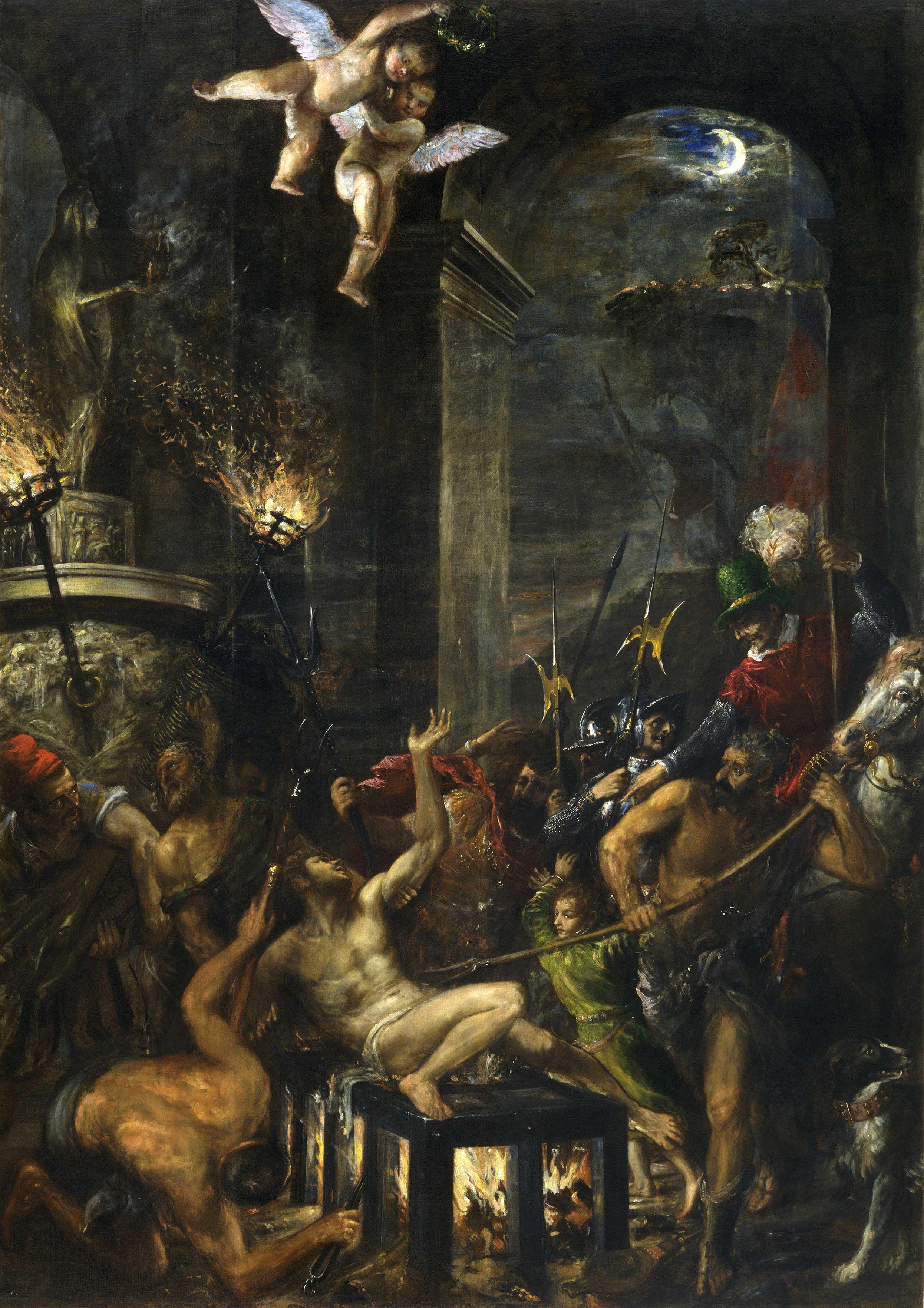
Lawrence (Laurentius) was one of the seven deacons of the Roman church in 258 AD, the year of the empire-wide persecution under the emperor Valerian. Valerian's second edict that summer specifically targeted Christian clergy and confiscated church property. Pope Sixtus II was arrested while celebrating the liturgy in the Catacomb of Praetextatus and was beheaded immediately, along with four of the seven deacons. Lawrence, as the senior deacon and the administrator of the Roman church's charity funds, was given a few days' reprieve so that he could turn over the church's wealth to the prefect.
The famous scene comes from Ambrose, writing about 130 years later. The Roman prefect ordered Lawrence to produce the treasures of the church. Lawrence, according to the tradition, returned several days later with the city's destitute — the blind, the lame, the sick, the widows and orphans the church was supporting — and presented them to the prefect: 'These are the treasures of the church.' Whether or not the dialogue is verbatim, the gesture is theologically exact: the deacon's office is precisely the office of administering the church's care for the poor, and Lawrence's reply makes the doctrine visible.
The mode of his death — roasted on a gridiron over a fire — is preserved by Ambrose, Prudentius, and Augustine. Modern Bollandist scholarship has questioned whether the gridiron is historical or a literary motif borrowed from the broader Roman martyrological imagination; some scholars argue that the mode was beheading, like Sixtus and the other deacons, and that the gridiron tradition developed later. The earliest sources are silent or contradictory. What is firmly attested is that he was killed during the August 258 persecution, that he was buried on the Via Tiburtina (where the Basilica of San Lorenzo fuori le Mura still stands over his tomb), and that his cult spread rapidly across the Christian Mediterranean.
The Lawrence-on-the-gridiron tradition also preserves a now-iconic line attributed to him during the burning: 'Turn me over — I'm done on this side.' Whether this is invention or tradition, it captured the Christian imagination because it embodied the strange, almost dark humor of martyrdom in the Christian tradition: a man who knows he is already dead in baptism cannot be threatened with death. Augustine, in his sermons on Lawrence, returns repeatedly to this point: the martyr's freedom is the freedom of someone whose life is no longer his own to lose.