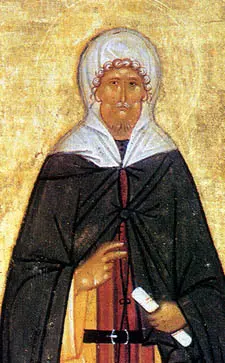
Ephrem the Syrian
The greatest poet of the early church — a Syriac deacon who taught the deepest theology in hymns, and sang the faith into a people's memory.
“Let us not allow ourselves to go astray and to study our God by means of definitions and syllogisms.”
— Hymns on Faith
Ephrem was born around 306 in Nisibis, on the eastern frontier of the Roman world, and served as a deacon there under its bishop before the city was ceded to Persia in 363, when he moved to Edessa. He represents a whole stream of Christianity the Greek- and Latin-centered story often forgets: Syriac Christianity, rooted in a Semitic language close to the Aramaic Jesus spoke, theologizing through image and symbol rather than philosophical definition.
His chosen instrument was the hymn. Where others wrote treatises, Ephrem wrote madrashe — teaching songs, many composed for choirs of women to sing in the liturgy. Through paradox and biblical imagery he guarded orthodoxy against the heresies of his day (he answered the followers of Bardaisan and Mani with better songs than theirs) and unfolded the mysteries of Paradise, the Nativity, and the Cross. The church called him 'the Harp of the Spirit'; later tradition named him a Doctor of the Church, the only Syriac father so honored.
Ephrem distrusted prideful speculation about God: 'Let us not allow ourselves to go astray and to study our God by means of definitions and syllogisms,' he warned, preferring wonder to dissection. He spent his last years serving the poor and the sick of Edessa, organizing famine relief during a plague, and died in 373 — leaving a body of poetry so vast and beloved that much of it was translated into Greek within his own century. Through Ephrem the church learned that the highest theology can be sung.
- Theology through symbol, paradox, and song rather than definition
- Reverent wonder over prideful speculation about God
- The deep dignity of the Syriac, Semitic stream of Christianity
- Orthodoxy guarded and taught in the liturgy's hymns
Born in Nisibis, Mesopotamia
Serves as deacon under Bishop Jacob of Nisibis
Composes hymns answering Arian and Gnostic teachers
Nisibis ceded to Persia; Ephrem moves to Edessa
Writes the Hymns on Paradise and on the Nativity
Dies in Edessa after organizing famine relief
A cycle of madrashe (teaching hymns) contemplating Eden, the fall, and the restoration of humanity through Christ — Syriac theology at its most luminous.
Poems on the Incarnation, weaving the wonder of God-made-flesh through paradox and biblical type.
His exposition of Tatian's harmony of the Gospels — a major witness to the Syriac biblical tradition.
Related Articles
All Articles
Frequently Asked Questions
Who was Ephrem the Syrian?
The greatest poet of the early church — a Syriac deacon who taught the deepest theology in hymns, and sang the faith into a people's memory.
When did Ephrem the Syrian live?
Ephrem the Syrian lived c. 306 AD – 373 AD in Mesopotamia / Syria, during the 4th Century.
What did Ephrem the Syrian teach?
Key teachings associated with Ephrem the Syrian include: Theology through symbol, paradox, and song rather than definition; Reverent wonder over prideful speculation about God; The deep dignity of the Syriac, Semitic stream of Christianity; Orthodoxy guarded and taught in the liturgy's hymns.
What did Ephrem the Syrian write?
Notable writings include Hymns on Paradise, Hymns on the Nativity, and Commentary on the Diatessaron.