Articlepublished
The Codex Sinaiticus: The Manuscript That Shaped the Bible
By Christian Garces2026-05-153 min read
Release2026-05-15
Read time3 min read
What It Is
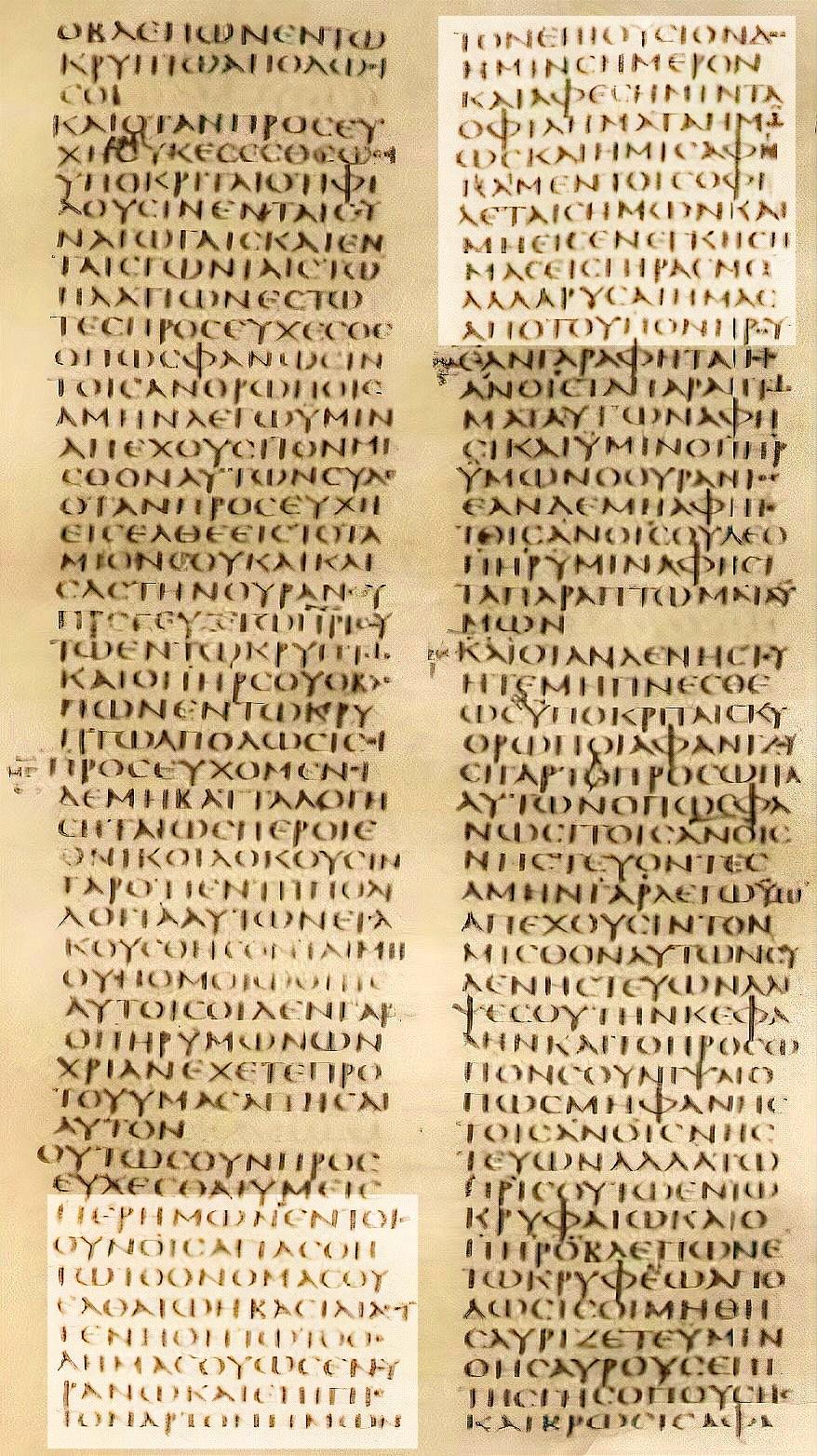
The Codex Sinaiticus is a handwritten Greek Bible dating to the mid-fourth century AD — roughly 330 to 360 — making it among the oldest surviving manuscripts of the Christian Scriptures. It is written on vellum, prepared from animal skins, in a script called biblical uncial: large, careful, individual capital letters without spaces between words. When complete it contained the entire Old Testament in the Greek Septuagint translation, the entire New Testament, and two other early Christian texts — the Epistle of Barnabas and the Shepherd of Hermas — that some early communities treated as Scripture.
The Codex is now physically split across four institutions: the British Library in London holds the largest portion, with smaller sections in the National Library of Russia in Saint Petersburg, Leipzig University Library, and Saint Catherine's Monastery on Mount Sinai where it was found. A digital reunification project completed in 2009 made the entire manuscript available online for the first time.
The Discovery
The German biblical scholar Constantin von Tischendorf made three journeys to Saint Catherine's Monastery between 1844 and 1859. On the first visit, he noticed pages from the manuscript being used as kindling — or so the dramatic account goes, though the monastery's own version disputes some details. He retrieved what he could: 43 leaves, now held in Leipzig. On his third visit in 1859, under the patronage of Tsar Alexander II of Russia, he was shown a complete codex in the hands of the monastery's steward. He examined it overnight and returned to Saint Petersburg with it — whether by loan, gift, or outright removal remains disputed to this day. The monastery has pressed for the manuscript's return.
What It Reveals
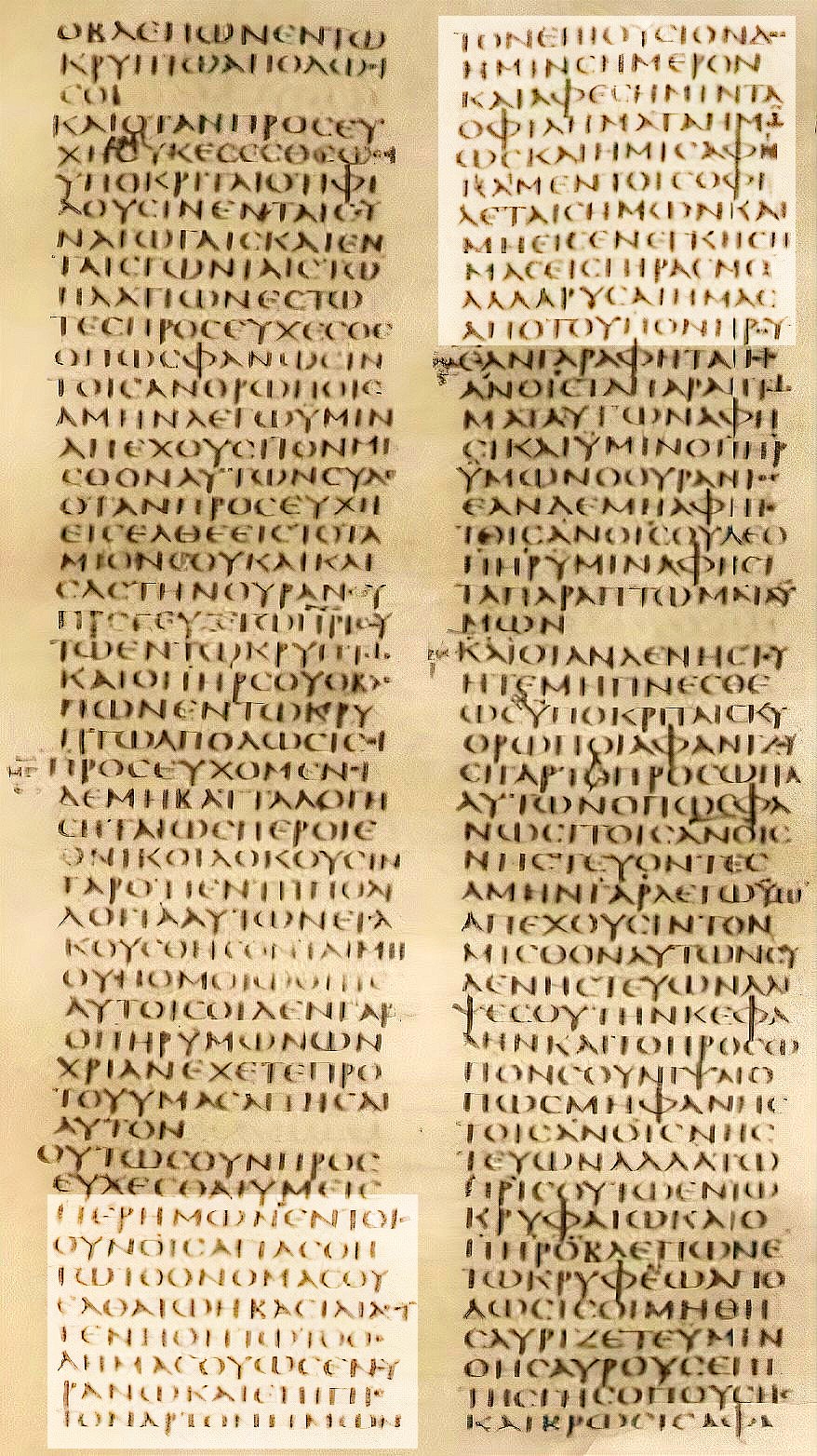
The Sinaiticus is not identical to the Greek New Testament text most Christians know. It contains passages that later manuscripts lack, and lacks passages that later manuscripts include. Most famously: the ending of Mark's Gospel (16:9–20), which describes post-resurrection appearances and the handling of serpents, is absent. The woman caught in adultery (John 7:53–8:11) is absent. These omissions have generated centuries of debate about which text is original.
The manuscript also shows the work of multiple scribes — scholars have identified at least three — and numerous later corrections, made by hands spanning several centuries. This makes the Sinaiticus a living document: not frozen at the moment of its creation but annotated, adjusted, and engaged by readers across more than a millennium. The corrections are not corruptions. They are evidence of a community taking the text seriously enough to return to it, again and again, with pen in hand.
The Manuscript and the Canon
The inclusion of the Epistle of Barnabas and the Shepherd of Hermas in the Sinaiticus is a reminder that the boundaries of the Christian canon were not settled instantaneously. The fourth century — in which the Sinaiticus was produced — was precisely the era in which bishops and councils were working out which texts belonged to the definitive collection. Athanasius of Alexandria, in his Festal Letter of 367 AD, listed for the first time the 27 books of the New Testament as we now have them. The Sinaiticus, produced in that same generation, reflects the ongoing process of canonization rather than its settled conclusion.
What the manuscript demonstrates, above all, is the seriousness with which the early Church treated the written word. To produce a full Bible on vellum in the fourth century required hundreds of animals, thousands of hours, and enormous institutional resources. Someone commissioned this manuscript because the text was precious enough to merit that investment. The Codex Sinaiticus is not merely a witness to the words of Scripture; it is a witness to the community that treated those words as worth preserving at great cost — which is to say, the same community that had received them.
Continue Exploring
Discovered in a monastery on Mount Sinai in the 1840s, the Codex Sinaiticus is the oldest complete manuscript of the New Testament. Its story is one of survival, controversy, and the providential transmission of the faith.
The Studio Brief
Theology Delivered Weekly
Essays on the Fathers, sacred art, cosmology, and the hidden logic of Christian doctrine — sent directly to your inbox. No noise. No filler.
Weekly
Cadence
Free
Always
Patristic
Focus
Related
Browse Archive
Read
Sacred Art
2026-05-22
The Apostolic Fire
Memory, martyrdom, and the visual language of witness.
Read
Christology
11 min read / 2026-05-17
Why the Lord's Supper Divides Christians
The Eucharist is the most thoroughly attested practice of the earliest Church — and the single sacrament that has done the most to keep Christians apart. The reason is not pettiness. It is Christology.

Read
Christology
10 min read / 2026-05-17
The Jewish Roots of Christian Easter
Easter is not a Christian appropriation of pagan spring rites. It is the Christian fulfillment of the Jewish Passover — and the New Testament insists on this from its earliest layer.