Articlepublished
Montanism: When Prophecy Claimed to Exceed the Apostles
By Christian Garces2026-05-154 min read
Release2026-05-15
Read time4 min read
The New Prophecy
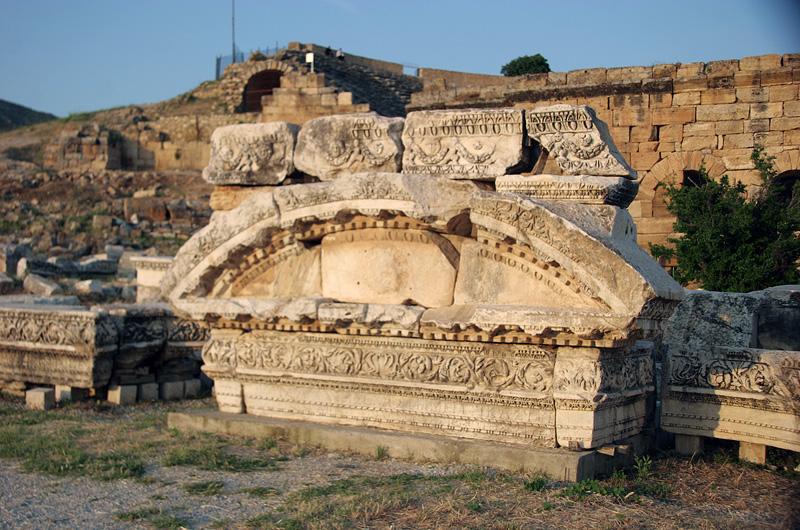
Around 165 AD in the village of Ardabau in Phrygia (modern Turkey), a recent convert named Montanus began to prophesy in a manner that disturbed his neighbors. Unlike the tested and measured prophetic speech the Church had long recognized, Montanus fell into ecstatic states and spoke in the first person — not as a prophet reporting what God had said, but as the voice of God himself. "I am the Lord God Almighty, dwelling in a man," one of the surviving Montanist oracles reads. Two women, Priscilla and Maximilla, joined him as co-prophetesses, and the movement spread rapidly across Asia Minor, North Africa, and eventually Rome.
The Montanists called their movement the New Prophecy, and the name reveals their central claim: the Holy Spirit — whom they identified with the Paraclete promised in John 14 — was now completing what the apostolic age had begun. Montanus was the instrument of this completion. His prophecies were not commentary on apostolic teaching but its culmination.
What the New Prophecy Taught
Montanism was distinguished less by unusual doctrine than by unusual practice and extraordinary claims about continuing revelation. Doctrinally, the Montanists were orthodox Trinitarians; unlike the Gnostics, they did not dispute the creation, the incarnation, or the resurrection. What they added was a rigorist ethic and a prophetic absolutism. Second marriages were forbidden. Fasting requirements were intensified. Martyrdom was to be sought, not avoided. The New Jerusalem was about to descend at Pepuza in Phrygia — Montanus' own village — and the faithful should gather there to meet it.
The most significant claim was the authority of the prophetic oracle itself. If the Paraclete was speaking directly through Montanus, Priscilla, and Maximilla, then their words carried an authority equal to — or exceeding — the written apostolic deposit. This was the theological nerve that the Church identified and cut. The question was not whether the Spirit could speak through prophets. The Church had always acknowledged prophets. The question was whether new prophetic utterances could modify, supplement, or override what the apostles had handed down in the Scriptures and in the rule of faith.
Tertullian and the Appeal of Severity
The most famous convert to Montanism was also the most intellectually formidable: Tertullian of Carthage, the brilliant North African lawyer who had become one of the most effective defenders of Christian orthodoxy against paganism and heresy. Around 207 AD, Tertullian embraced the New Prophecy and spent the remainder of his writing career attacking the Catholic Church as insufficiently rigorous — too lenient in restoring the lapsed, too willing to permit second marriages, too comfortable accommodating the flesh.
Tertullian's Montanism is a warning about a permanent temptation: the appeal of a more demanding version of Christianity that mistakes severity for holiness, discipline for faithfulness. The Church's patience with the weak, the fallen, and the remarried looked like compromise to Tertullian. What he called compromise was actually the pastoral wisdom that Paul had modeled — bearing with one another, receiving the repentant, recognizing that the community of the redeemed includes the perpetually imperfect.
Why the Church Refused It
The local councils that condemned Montanism in Asia Minor — among the earliest conciliar actions on record — were not defending institutional inertia against prophetic vitality. They were defending something that Montanism threatened to dissolve: the finality and sufficiency of the apostolic witness. If new revelation could perpetually extend, modify, or intensify the apostolic deposit, then the Church would have no stable foundation. Every generation could produce its own Montanus.
Irenaeus articulated the principle most clearly: the apostles handed down the faith completely. What the bishops have received and transmit is the whole deposit, not a partial one awaiting completion. The Spirit's work in the post-apostolic Church is not to produce new revelation but to illuminate what has already been given — to lead the Church into all truth, as Jesus promised, by deepening its understanding of the truth already delivered through the apostles and prophets. The canon of Scripture is closed not because God cannot speak but because the decisive, unrepeatable event of the Incarnation has already occurred and been fully witnessed.
Montanism never disappeared. Its pattern — the claim to direct prophetic authority that supplements or supersedes the written Word and the apostolic tradition — recurs in every century, in the medieval Joachites, in some streams of radical Reformation prophecy, and in contemporary movements that place fresh revelation on a level with or above the canonical Scriptures. The Church's ancient answer remains: test the spirits; hold to what has been delivered; the canon is sufficient, and the Spirit's work is to illumine it.
Continue Exploring
Montanus claimed the Holy Spirit was speaking through him with a new and final revelation that completed what the apostles had left unfinished. The Church's rejection of his movement defined something essential about how Christian authority works.
The Studio Brief
Theology Delivered Weekly
Essays on the Fathers, sacred art, cosmology, and the hidden logic of Christian doctrine — sent directly to your inbox. No noise. No filler.
Weekly
Cadence
Free
Always
Patristic
Focus
Related
Browse Archive
Read
Sacred Art
2026-05-22
The Apostolic Fire
Memory, martyrdom, and the visual language of witness.
Read
Christology
11 min read / 2026-05-17
Why the Lord's Supper Divides Christians
The Eucharist is the most thoroughly attested practice of the earliest Church — and the single sacrament that has done the most to keep Christians apart. The reason is not pettiness. It is Christology.

Read
Christology
10 min read / 2026-05-17
The Jewish Roots of Christian Easter
Easter is not a Christian appropriation of pagan spring rites. It is the Christian fulfillment of the Jewish Passover — and the New Testament insists on this from its earliest layer.