Articlepublished
Rembrandt's Prodigal: The Father's Hands
By Christian Garces2026-05-164 min read
Release2026-05-16
Read time4 min read
The Late Work
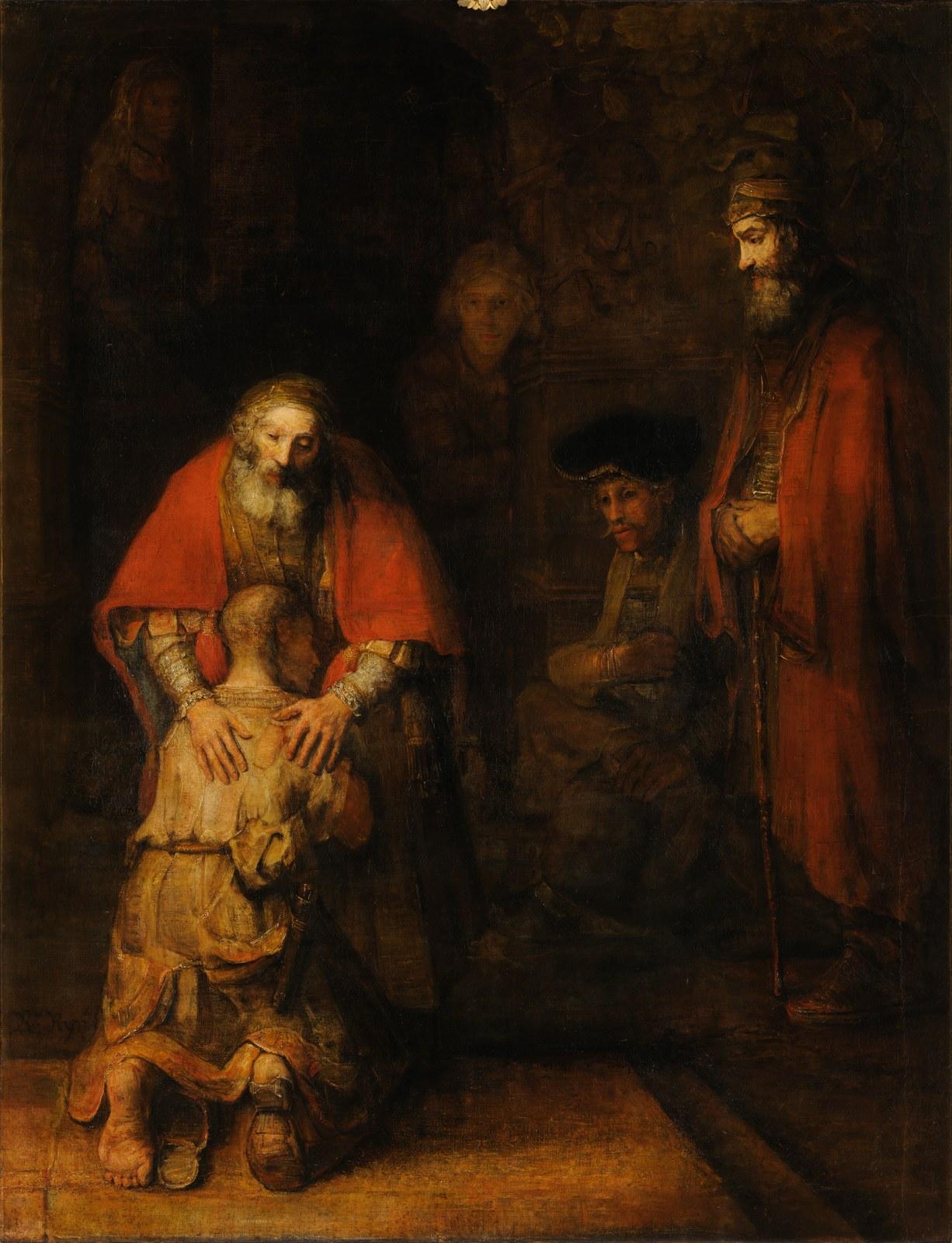
Rembrandt van Rijn painted The Return of the Prodigal Son sometime in the 1660s, near the end of his life — a period of financial ruin, personal loss, and, by most accounts, spiritual depth. He had buried his wife, his son, and most of his prosperity. He was painting out of something that wealth had not given him and poverty could not take away. The result is one of the most theologically saturated images in Western art, and one of the quietest.
What the Canvas Shows
A young man kneels at the feet of an old man who leans over him, hands on his shoulders. The son's head is shaved — the sign of a slave. His sandals are worn through on one foot; the other is bare. His coat is in rags. He presses his face into his father's chest with the posture of absolute exhaustion — the posture of a man who has used up every other option and arrived, finally, at the only place left. The father does not pull away. He does not hold the son at arm's length and deliver the speech the son has prepared. He simply folds himself around what is left of his child.
Standing to the right are witnesses — identified variously as the elder brother, servants, and bystanders. They watch. Their faces carry different registers: curiosity, judgment, something like sorrow. They are the audience that does not quite understand what they are watching. The father is not performing for them. He has already forgotten they are there.
The Hands
The theological center of the painting is the father's hands. Henri Nouwen, in his famous meditation on this work, noticed what every careful viewer notices: the hands are not the same. The left hand — large, broad, unmistakably masculine — grips the son's shoulder firmly. The right hand — softer, smaller, almost feminine in its gentleness — rests with a different quality of touch. Two hands. Two qualities of love: the strength that will not let go and the tenderness that will not crush.
This asymmetry is certainly intentional. Rembrandt was too skilled, and the difference is too consistent across the painting's execution, to be accidental. Some interpreters see it as a reference to God as both Father and Mother — the dual quality of divine love that Isaiah invokes ("Can a mother forget the baby at her breast?... I will not forget you"). Others see it simply as the fullness of parental love, which holds with strength and touches with tenderness simultaneously. Either reading is consistent with the parable. The father in Luke 15 does not moderate his welcome. He runs. He calls for the robe, the ring, the feast. He does not ask for the prepared speech. The son does not finish it.
Light From No Source
The Rembrandt light in this painting has no obvious source. It emanates from the figures themselves — from the father's golden robe, from the son's tattered back, from whatever it is that is happening between them. This is the visual grammar of Rembrandt's late religious work: light not as illumination falling from outside but as presence radiating from within. In theological terms, this is the language of the Shekinah — divine presence as visible radiance — and of the Transfiguration, in which the disciples saw Christ's face shine not from a reflective surface but from within. The light is not dramatic. It is intimate. It belongs to two people who are, at this moment, their own source of warmth.
What Rembrandt Understood
The parable of the prodigal son is not primarily a story about the son. Jesus tells it in Luke 15 in a sequence with the lost sheep and the lost coin — parables in which the searching party goes out to find what is lost. The father in the third parable does not go searching. But he has clearly been watching the road. He "saw him while he was still a great way off." He had not stopped looking. He ran — which a man of his age and status would not do; it was undignified — because the moment he saw the figure on the road he was already gone.
Rembrandt, painting from the far end of a life that had given him plenty of occasions to know what it means to come back with nothing, painted the father who was already running before the son arrived. The son in the painting is not in motion. He is still. He has stopped moving because there is nowhere left to go. The father is the one who covered the distance. That is the theology. That is what Rembrandt knew. And that is what the painting, in the failing light of his studio in the 1660s, will not let you forget.
Continue Exploring
Rembrandt painted The Return of the Prodigal Son near the end of his life, in poverty. He painted a father who has already begun running before we arrive at the scene. The hands tell the whole story.
The Studio Brief
Theology Delivered Weekly
Essays on the Fathers, sacred art, cosmology, and the hidden logic of Christian doctrine — sent directly to your inbox. No noise. No filler.
Weekly
Cadence
Free
Always
Patristic
Focus
Related
Browse Archive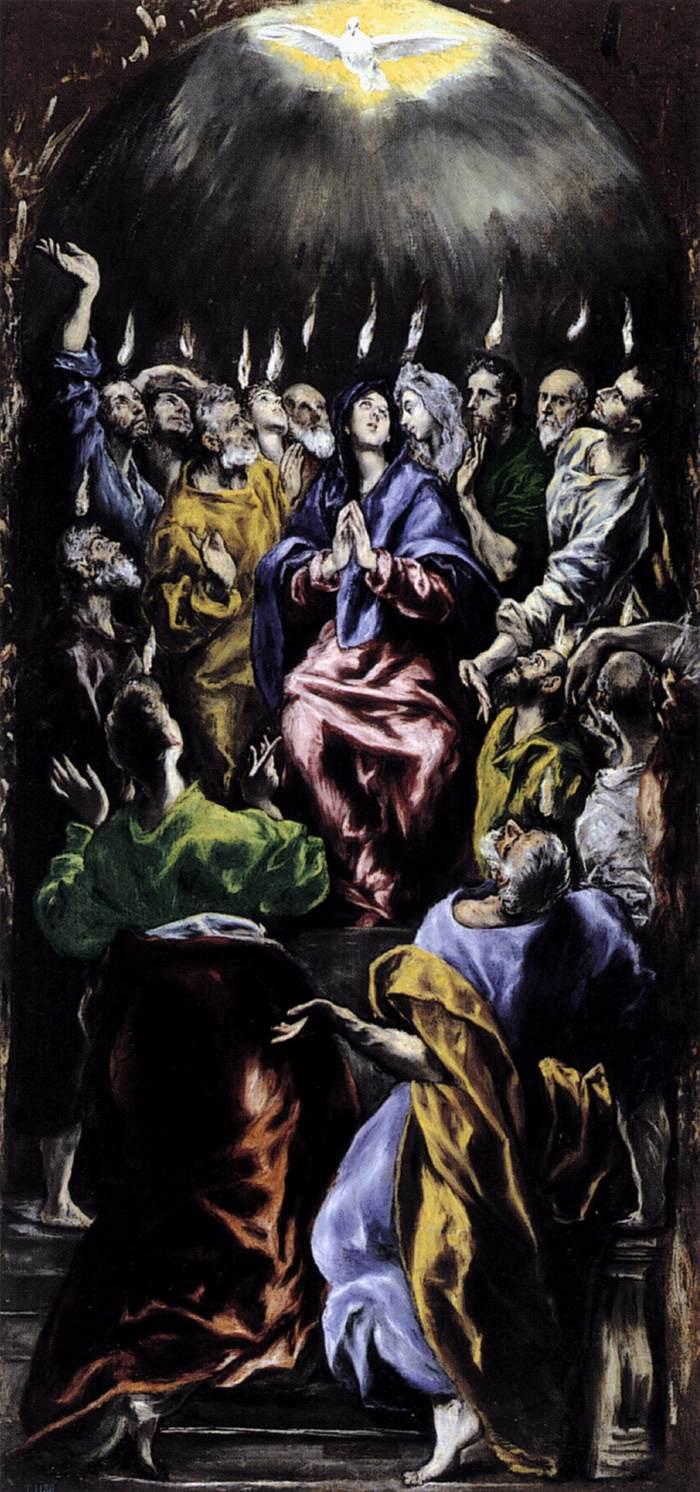
Read
Sacred Art
2026-05-22
The Apostolic Fire
Memory, martyrdom, and the visual language of witness.
Read
Christology
11 min read / 2026-05-17
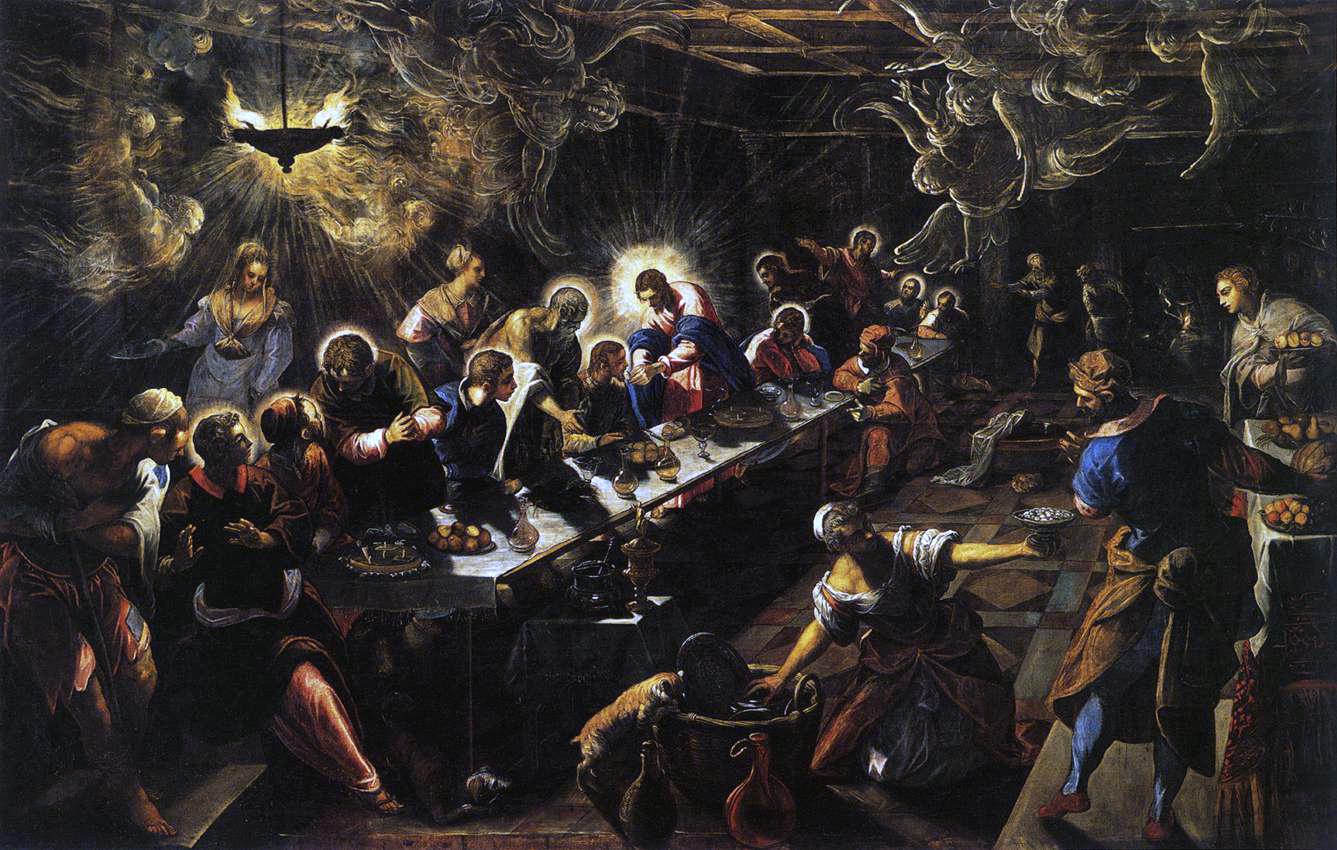
Why the Lord's Supper Divides Christians
The Eucharist is the most thoroughly attested practice of the earliest Church — and the single sacrament that has done the most to keep Christians apart. The reason is not pettiness. It is Christology.
Read
Christology
10 min read / 2026-05-17
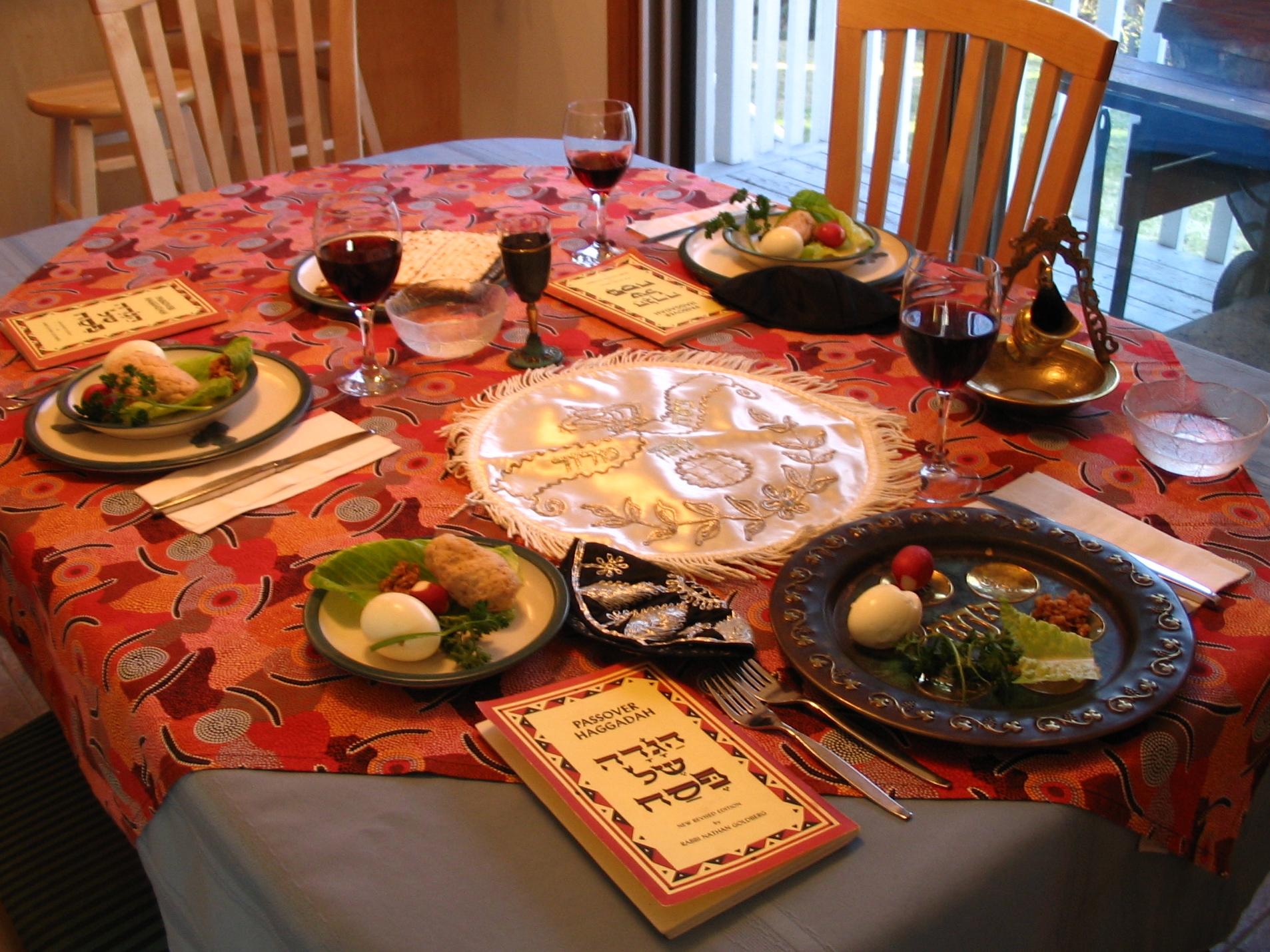
The Jewish Roots of Christian Easter
Easter is not a Christian appropriation of pagan spring rites. It is the Christian fulfillment of the Jewish Passover — and the New Testament insists on this from its earliest layer.