Articlepublished
Azusa Street and the Birth of Global Pentecostalism
By Christian Garces2026-05-1711 min read
Release2026-05-17
Read time11 min read
The Movement With No Single Origin Story
Modern Pentecostalism is the second-largest stream of contemporary Christianity, surpassed in numerical size only by Catholicism. The most recent serious estimates — Pew Research Center’s 2011 global survey, updated in the World Christian Encyclopedia, 3rd edition (2019) and in Allan Anderson’s subsequent work — put Pentecostal and Charismatic Christians worldwide at around 600 million, with adherents in nearly every country on earth and growth rates outpacing every other major religious tradition.[1] It is also the youngest of the major Christian traditions: a movement with a continuous institutional history of barely 120 years. It has no single founder, no single confessional document, no single ecclesial structure. But if a single founding event must be named, the field has converged on one: the revival that ran for three years of continuous meetings between April 1906 and 1909 at a converted livery stable at 312 Azusa Street in downtown Los Angeles, under the pastorate of an African-American Holiness preacher named William Joseph Seymour. From that mission the movement spread to every continent within a single decade.[2]
The Forerunners: Wesley, Palmer, Parham
Azusa Street did not happen in a vacuum. The doctrinal architecture that Seymour preached was inherited from the Holiness movement of the eighteenth and nineteenth centuries, and ultimately from John Wesley’s eighteenth-century doctrine of entire sanctification — the conviction that conversion ought to be followed by a distinct, datable second work of grace in which the believer is cleansed of inbred sin and consecrated to perfect love. The American Holiness movement of the nineteenth century developed Wesley’s doctrine in revivalist forms. Phoebe Palmer’s “altar theology” in the 1840s and 1850s gave the experience a precise procedural shape: lay your “all on the altar,” believe that the altar sanctifies the gift, and testify to what God has done. By the end of the nineteenth century the Holiness movement had given birth to dozens of small denominations and to a vast network of camp meetings, missionary societies, and Bible institutes.[3]
Charles Fox Parham, a former Methodist preacher of restless temperament, took the Holiness architecture and added a further category. At his Bethel Bible School in Topeka, Kansas in late 1900 he set his students to search the New Testament for the consistent biblical evidence of the baptism in the Holy Spirit. The conclusion they reached — according to the testimony of Agnes Ozman, the first to experience it on January 1, 1901 — was that the evidence was speaking in tongues. Parham now had a three-stage ordo salutis: conversion, sanctification, and a third experience of Spirit baptism evidenced by tongues. He preached the doctrine across Kansas, Texas, and Missouri for the next five years.[4] His Houston Bible school, opened in late 1905, was the doctrinal forge from which Pentecostalism in its mature form would come.
William J. Seymour
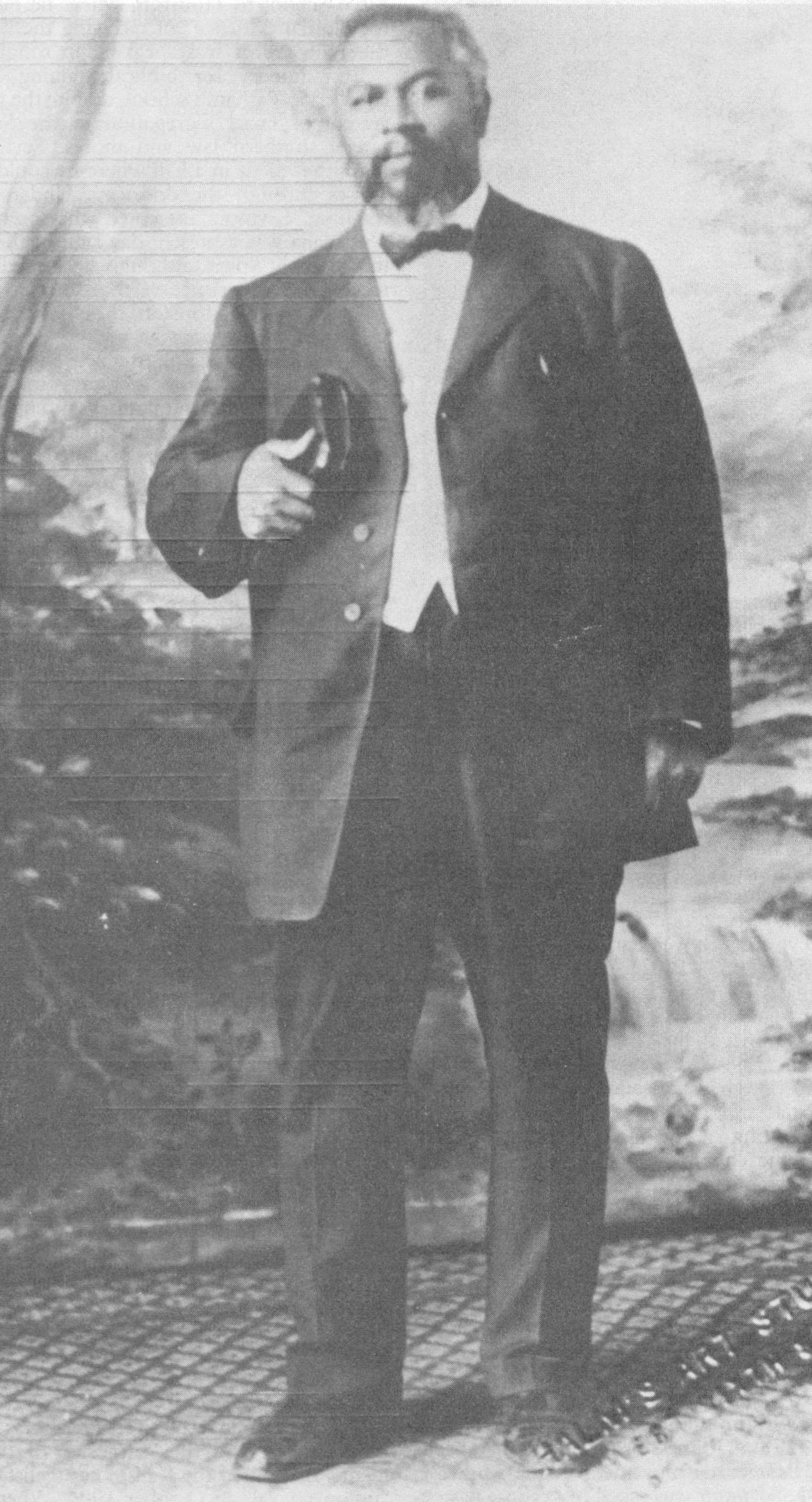
William Joseph Seymour was born in Centerville, Louisiana, on May 2, 1870, five years after Emancipation, to formerly enslaved parents. He grew up in the Black Baptist tradition of the Reconstruction South, lost the sight in one eye to smallpox in his late twenties, and migrated through Indianapolis and Cincinnati in search of work and of a religious community that matched what he was reading in the New Testament. He joined the Evening Light Saints (a Holiness body that became the Church of God, Anderson), came under the influence of the African-American Holiness preacher Lucy Farrow in Houston around 1903, and through Farrow encountered Charles Parham’s teaching on Spirit baptism. In late 1905 Seymour enrolled in Parham’s Houston Bible school. Texas segregation law forbade his entry to the classroom; Parham, who had earlier made a public commitment to racial integration in the gospel, agreed to a compromise that has marked the historical record ever since: Seymour was permitted to sit in the hallway outside the classroom and listen through the open door.[5] Cecil M. Robeck Jr., the standard modern historian of the revival, treats this as the founding wound of American Pentecostalism. Seymour learned Parham’s doctrine while being denied entry to the room in which it was taught.
In February 1906 Seymour accepted a call to pastor a small Black Holiness mission at the corner of Santa Fe Avenue and Ninth Street in Los Angeles. He preached Parham’s doctrine of Spirit baptism with the expected tongues evidence for several weeks before he himself had experienced it. The existing pastor, Julia Hutchins, locked him out. Seymour and his hosts moved to the home of Richard and Ruth Asberry at 214 North Bonnie Brae Street, where the group gathered for weeks of prayer and fasting. On the evening of April 9, 1906, Edward Lee spoke in tongues at the Asberry home, then Jennie Moore (who would become Seymour’s wife in 1908), and finally, on April 12, Seymour himself. The crowds swelled within days. By April 14 the group had moved to a former African Methodist Episcopal church building at 312 Azusa Street, recently used as a livery stable and warehouse, which the new congregation cleared and refurbished.[6] The Azusa Street Apostolic Faith Mission opened for what would become three years of continuous meetings.

What Happened on Azusa Street
Three services a day, three years of continuous meetings, sometimes round the clock. The mission seated about three hundred and fifty in benches converted from former pews, with sawdust on the floor and a packing-crate pulpit. Frank Bartleman, a journalist and Holiness preacher who joined the revival in its earliest weeks and later wrote the first published eyewitness account, gave the famous summary: “The color line was washed away in the blood.”[7] At the height of segregated Los Angeles, in a city whose civic life was structured by the racial codes that would soon produce the 1908 immigration laws and a generation of municipal redlining, the Azusa congregation was Black, white, Latino, and Asian, with men and women of every class in worship together. Seymour presided with a Bible open on the wooden shoe-crate at the front, often with his head buried in the crate to pray rather than perform. There was no advertised order of service; songs began when someone began to sing them, testimonies and prayer when someone rose to give them, preaching when the Spirit was understood to have moved someone to preach. Tongues, prophecy, healing testimonies, and the “heavenly chorus” (the spontaneous unison singing in tongues that observers described as the revival’s most uncanny feature) were daily occurrences.
The Apostolic Faith newspaper, first published in September 1906 under Seymour’s editorship with Clara Lum as the managing editor, became the global communication organ of the movement. It was distributed free; it ran to thirteen issues between September 1906 and May 1908; at its peak it had a circulation of around 50,000 with subscribers on every continent. The paper’s testimonies and instructions drove the international spread of Pentecostalism in the revival’s first years. The subscription list itself became the subject of one of the revival’s great betrayals: in May 1908 Clara Lum left Los Angeles for Portland to join Florence Crawford’s mission, taking the Apostolic Faith mailing list with her, and continuing publication of the paper from Portland as if it were the same paper. The Azusa Street mission’s global voice was, at a stroke, silenced.[8] Seymour and Jennie Moore traveled across the country in late 1908 in an unsuccessful effort to recover the list. From that point the Azusa mission was a regional Black congregation rather than the central institution of an international movement.
The Fissure With Parham
The doctrinal split was not the deepest one. Charles Parham arrived in Los Angeles in October 1906 at Seymour’s invitation, expected as a senior teacher. What he found horrified him. He spent his first service at Azusa, by his later account, “greatly distressed at the racial mixing”; he addressed the congregation in language hostile to the integrated worship and to what he considered the excessive emotional manifestations; Seymour and his elders barred him from the pulpit; Parham left and spent the rest of his life calling Azusa Street a fanatical aberration. The bitterness was personal as well as doctrinal: Parham, the white Southern teacher, could not accept that the disciple he had taught from the hallway was now the pastor of the most influential revival on the continent, and that the revival’s leadership was Black. Subsequent allegations against Parham involving sexual misconduct in San Antonio in 1907, which he denied but which were widely circulated in the Holiness press, further damaged his standing. By 1908 the two centers of the early Pentecostal movement — Parham’s Apostolic Faith network and Seymour’s Azusa mission — were institutionally separate, with Parham retreating to a regional Midwestern ministry and Seymour to a regional Los Angeles one.[9]
The Global Diaspora
The international spread of the revival in 1906–1910 is the feature that distinguishes Pentecostalism from every preceding American Holiness movement. Visitors to Azusa Street returned to their home countries within months and planted Pentecostal works. Thomas Ball Barratt, a Methodist pastor in Norway, received Spirit baptism in New York in October 1906 after contact with the Azusa correspondence; he returned to Oslo and led the founding revival of European Pentecostalism. Willis and Mary Hoover, Methodist missionaries in Valparaíso, Chile, read the Azusa Apostolic Faith newspaper and led a Pentecostal renewal in their congregations beginning in 1909; the resulting Methodist Pentecostal Church became the founding body of Chilean Pentecostalism, which by the early twenty-first century counted several million members.[10] William Wadé Harris, a Liberian Anglican lay catechist, began a prophetic ministry in West Africa in 1913 that converted an estimated 200,000 people across the Ivory Coast and Ghana in eighteen months; though Harris was not a missionary of Azusa in any direct sense, his Spirit-baptism Christology and his charismatic style were resonant with the Pentecostalism that would absorb his churches within a generation. Korean Pentecostalism is partly indebted to the 1907 Pyongyang Revival (whose origins are independent of Azusa, traceable to the Welsh Revival of 1904 by way of missionary networks in China and Manchuria), but Korean Pentecostal denominations from the 1920s forward took shape under direct Azusa-line influence as well.
By the 1920s the institutional shape of American Pentecostalism had settled into a pattern that would last most of the century. The Assemblies of God (organized in 1914 in Hot Springs, Arkansas, as a predominantly white Trinitarian Pentecostal denomination) and the Church of God in Christ (under Charles Harrison Mason, the largest historically Black Pentecostal body) became the two major streams. Aimee Semple McPherson founded the International Church of the Foursquare Gospel in 1923 and built the 5,300-seat Angelus Temple in Los Angeles, taking Pentecostalism into the mass-media culture of the radio age. The mid-century Charismatic Renewal — the importation of Pentecostal experience into mainline Protestant denominations — began in 1960 under Episcopal priest Dennis Bennett in Van Nuys, California, and into Catholic charismatic renewal at the Duquesne weekend retreat in 1967. By the late twentieth century the boundaries between “Pentecostal” (the historic denominations descended from Azusa) and “Charismatic” (Christians in non-Pentecostal denominations who shared the experience) had become porous, and the broader category “Pentecostal/Charismatic” had emerged as the standard demographic frame.
Seymour’s End and the Re-Segregation
Seymour’s tragedy was that the revival he had led could not sustain his vision of racial integration. The early years of organizational Pentecostalism saw a rapid re-segregation. White leaders began to separate from Black ones. By 1914 the Assemblies of God was organized as a predominantly white denomination; by the late 1910s most American Pentecostal bodies had re-segregated into parallel white and Black structures. Seymour’s response was the 1915 Doctrines and Discipline of the Azusa Street Apostolic Faith Mission, the most precise document he produced. It required that the leadership of the mission remain interracial in perpetuity. It named the loss of racial integration as the loss of the revival’s deepest gift. It did not save the broader movement’s shape. Seymour spent his remaining years pastoring the Azusa Street mission to a small, mostly Black congregation. He died of a heart attack on September 28, 1922, at age fifty-two. The mission building at 312 Azusa Street was demolished in 1931. For most of the twentieth century, Pentecostal historiography credited Parham as the doctrinal founder and treated Seymour as a regional figure. The reassessment that began with Walter Hollenweger in the 1970s and 1980s and was completed by Cecil M. Robeck Jr. in The Azusa Street Mission and Revival (2006) restored Seymour to his proper place: not as the inventor of the doctrine, but as the pastor of the revival from which the global movement spread, and as the figure who insisted, in a country structurally committed to segregation, that the gift of the Spirit could not be received without the breaking of that wall.[11]
Honest Assessment
An honest theological assessment of Pentecostalism a century later must hold several things at once. The movement’s growth has been the most remarkable demographic fact in twentieth- and twenty-first-century Christianity. Its insistence on the present activity of the Spirit, on the priesthood and giftedness of every believer, on bodily worship, on the cross-cultural portability of the gospel, and on the integration of the supernatural into ordinary church life has corrected real deficiencies in the Christian traditions that preceded it. Its racial origins under Seymour and its commitment to interracial worship at Azusa are a witness the mainline churches did not match for another sixty years. At the same time, the doctrinal innovation of “initial-evidence” tongues — the claim that speaking in tongues is the necessary biblical evidence of Spirit baptism — has been contested by serious Pentecostal theologians from F. F. Bosworth in the 1910s to Gordon Fee in the 1990s and has divided the movement internally. The prosperity-gospel deformations that emerged in the post-World War II Pentecostal mainstream, and that now constitute much of the Pentecostalism encountered in the global South via the televangelism networks, are theological deviations from the older Pentecostalism, not its mature flowering. The integrity of Seymour’s mission — preaching the cross, expecting the Spirit, refusing the racial wall — remains a living norm against which the movement’s present forms can be tested. The most thoroughgoing recent Pentecostal scholarship, particularly in Allan Anderson’s To the Ends of the Earth (2013) and the multi-volume Cambridge History of Pentecostalism, has begun the work of measuring the movement against the standard of its own founding event.
Continue Exploring
From a converted livery stable at 312 Azusa Street, Los Angeles, between 1906 and 1915, the second-largest stream of contemporary Christianity was born — and almost immediately segregated.
The Studio Brief
Theology Delivered Weekly
Essays on the Fathers, sacred art, cosmology, and the hidden logic of Christian doctrine — sent directly to your inbox. No noise. No filler.
Weekly
Cadence
Free
Always
Patristic
Focus
Related
Browse Archive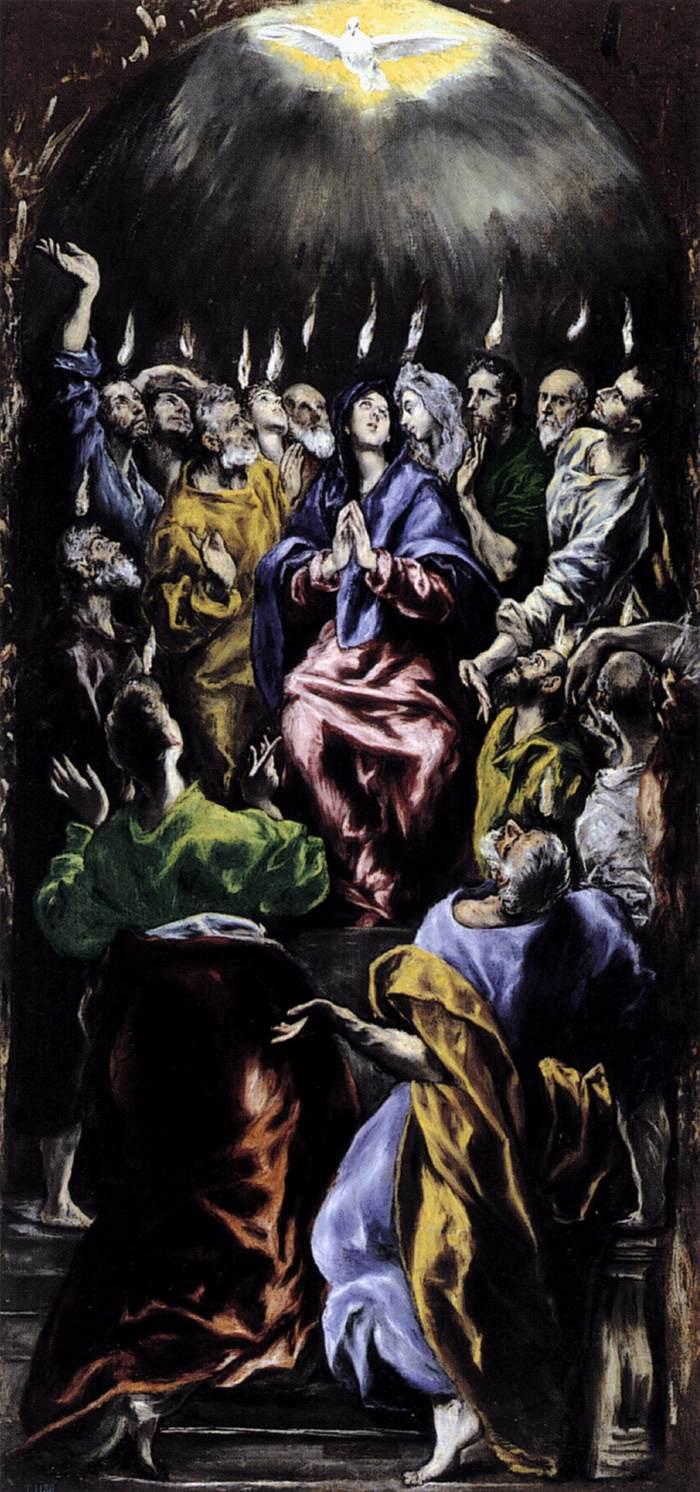
Read
Sacred Art
2026-05-22
The Apostolic Fire
Memory, martyrdom, and the visual language of witness.
Read
Christology
11 min read / 2026-05-17
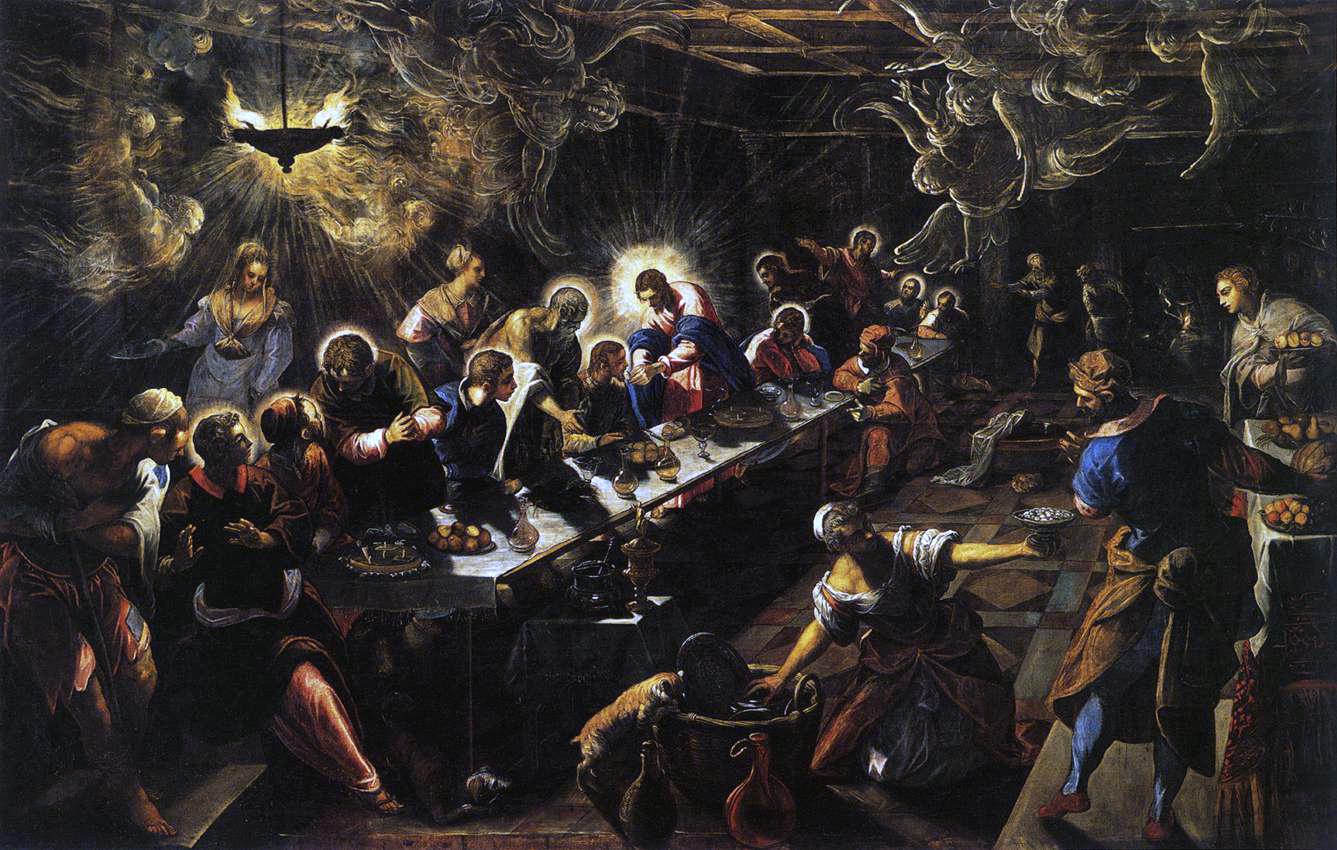
Why the Lord's Supper Divides Christians
The Eucharist is the most thoroughly attested practice of the earliest Church — and the single sacrament that has done the most to keep Christians apart. The reason is not pettiness. It is Christology.
Read
Christology
10 min read / 2026-05-17
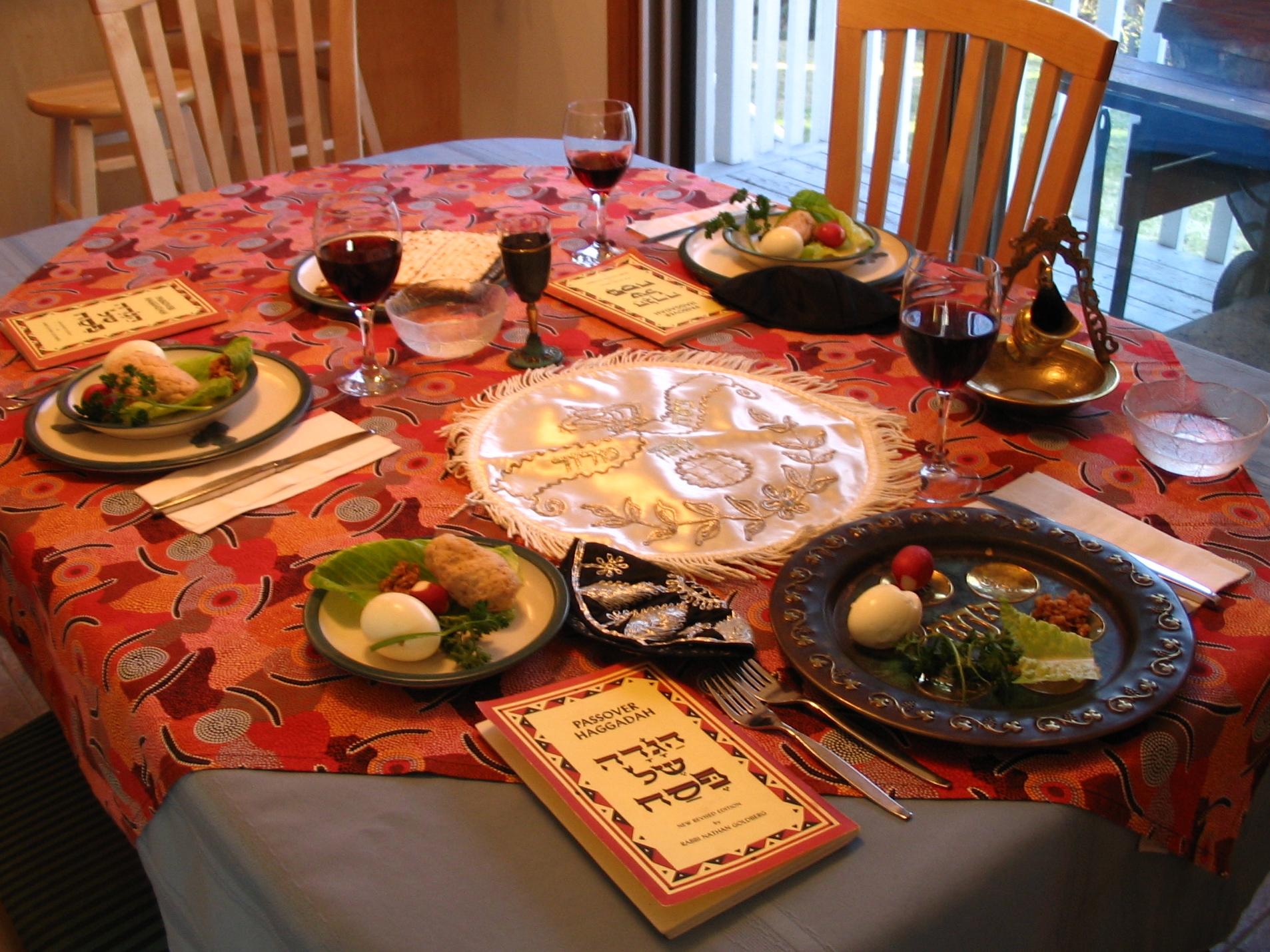
The Jewish Roots of Christian Easter
Easter is not a Christian appropriation of pagan spring rites. It is the Christian fulfillment of the Jewish Passover — and the New Testament insists on this from its earliest layer.